A shower that uses fewer resources in everyday life
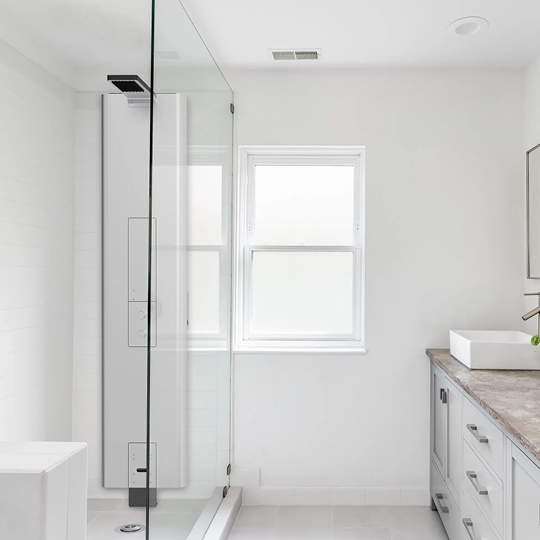
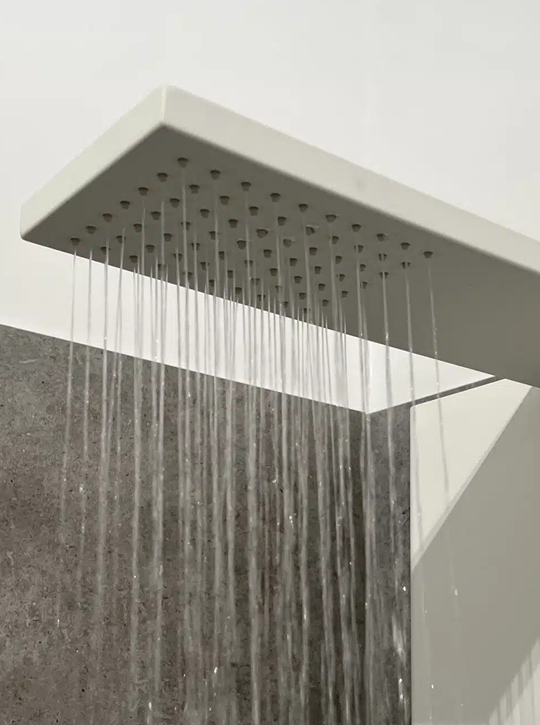
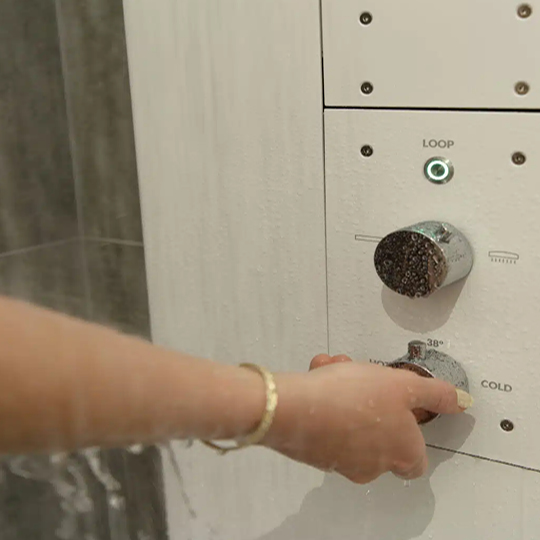
A traditional shower uses both clean water and energy for heating. Flow Loop is designed to reduce both by recirculating the warm shower water while you shower.
NIRAS’ analysis shows that a traditional shower is calculated to use 96 liters of water, while a shower using the LOOP function uses 17.5 liters. This corresponds to a water saving of 81.8% per shower under the assumptions used.
Energy consumption per shower is reduced by 69% at the same time, because far less new water needs to be heated. With Flow Loop, you can therefore save significantly on both water and energy — without turning the shower experience into a compromise.
Tested for sustainability
Documented savings with Flow Loop
NIRAS has measured the savings that can be achieved by using Flow Loop. The calculations show that the LOOP function can significantly reduce both water and energy consumption in each individual shower — and that the effect can become substantial if recirculating showers are implemented widely in Danish homes.
Lower energy consumption also contributes to lower CO₂ emissions, while the reduced water consumption can help ease the pressure on groundwater resources and sewage systems.
Water savings per shower
0%
Energy savings per shower
0%
Reduction in household water consumption
0%
Lower water consumption
Flow Loop recirculates the warm shower water while you shower. NIRAS’ calculation shows that water consumption can be reduced from 96 liters to 17.5 liters per shower — a saving of 81.8% under the assumptions used.
Lower energy consumption
When the warm water is reused, far less new water needs to be heated. That is why NIRAS’ calculations show an energy saving of 69% per shower when using the LOOP function.
Documented effect
Flow Loop’s environmental impact is documented in both the NIRAS report and an LCA assessment. The analyses show that the greatest environmental benefit occurs during the use phase, where water and energy consumption are reduced.
From the home to society
Small changes in the shower can create major savings
When one household saves water and energy in the shower, it can be seen in everyday consumption. When many households do the same, the effect becomes much greater.
NIRAS has calculated that if recirculating showers such as Flow Loop were implemented in all Danish homes, household water consumption could be reduced by 29%. This corresponds to approximately 73 million m³ of water per year.
The reduced water volume would also ease the pressure on groundwater resources and sewage systems. Flow Loop is therefore not only about savings in the individual home, but also about using our shared resources more efficiently.
Flow Loop is more complex to produce than a traditional shower. That is why it is important to look at the entire product life cycle — from production to everyday use over time.
The LCA assessment shows that the LOOP shower is more sustainable overall than a traditional shower. This is mainly due to the major difference in the use phase, where Flow Loop reduces the need for both new water and heating of shower water.
This means that the environmental benefit does not only lie in the technology itself, but in the way the shower is used every day.
Lower resource consumption without compromising the shower experience
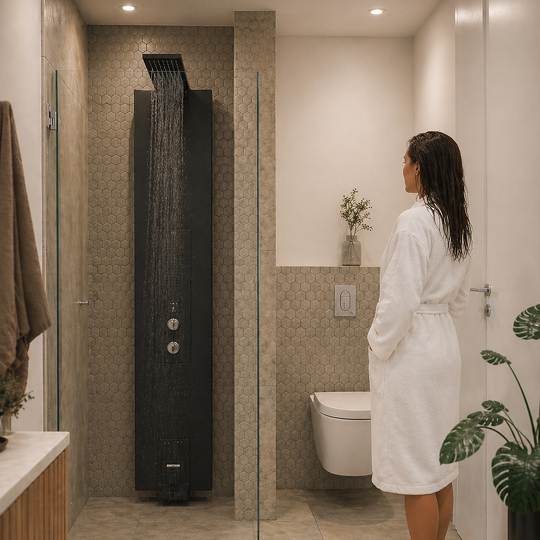
Charlotte Plum chose Flow Loop to reduce water consumption, energy consumption, and CO₂ emissions without compromising comfort. She especially highlights the pleasant water flow, the intuitive use, and the feeling of being able to shower with a better conscience. Flow Loop quickly became a natural part of everyday life and was chosen as a permanent solution after the test period.